Key Takeaways
- Accurate linear footage measurement is the foundation of any roofline lighting project — Delaware colonials and cape cods typically require 80–200 feet of C9 strand depending on stories and dormers.
- C9 bulbs spaced 12 inches apart are the standard for Delaware rooflines, delivering bold visibility from the street without overloading circuits.
- Clip selection matters enormously on coastal Delaware homes where salt air accelerates corrosion on inferior plastic and metal hardware.
- Improper installation is the leading cause of gutter damage and sagging strands — professional crews use shingle-safe clips and calibrated spacing jigs on multi-pitch rooflines.
- Booking roofline lighting installation early (summer or fall) locks in scheduling before Delaware's November rush; explore early-booking advantages to save stress and money.
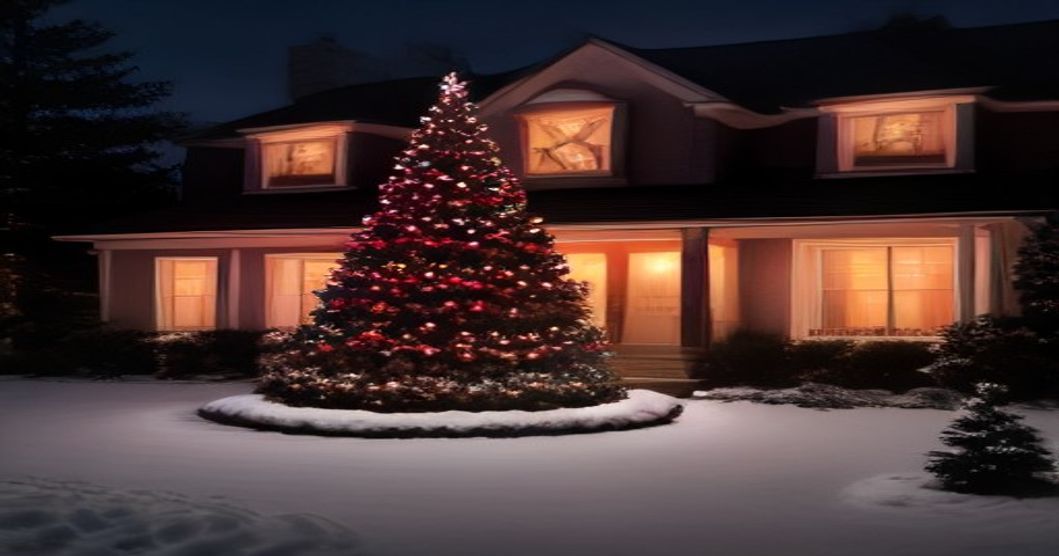
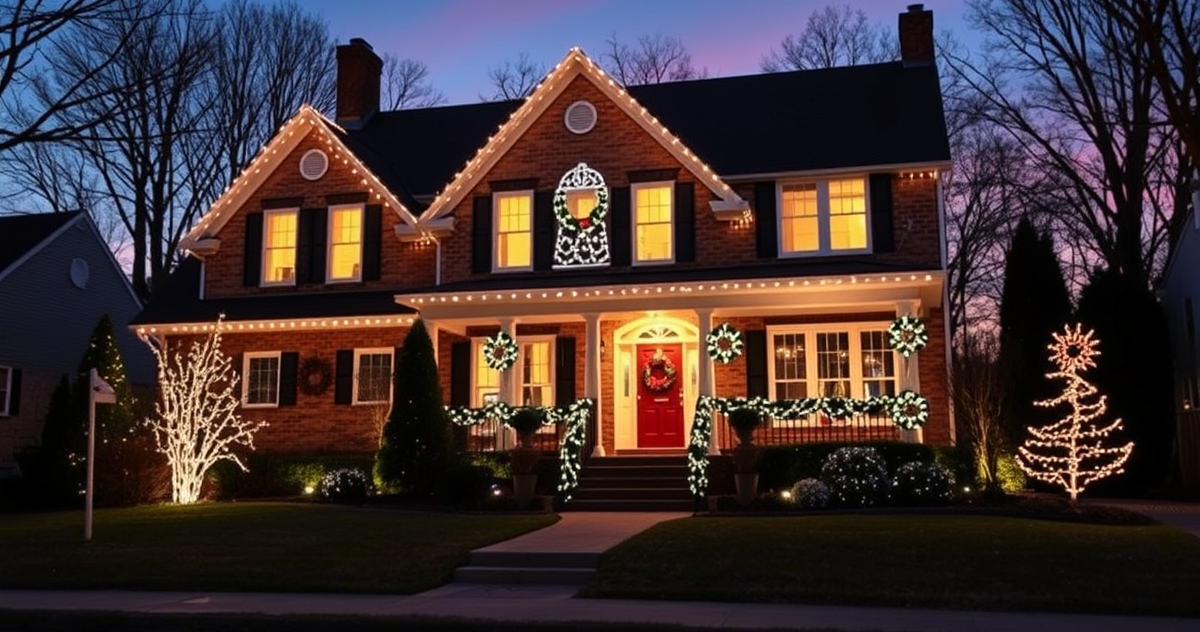
Picture the moment the switch flips on a Delaware colonial in mid-December: a clean, unbroken line of warm white C9 bulbs traces every gable, ridge, and dormer edge against a charcoal sky, steady and symmetrical from the street. That precise, architectural result doesn't happen by accident — it's the product of careful measurement, the right hardware for Delaware's coastal climate, and installation technique that keeps gutters intact through January's freeze-thaw cycles. Whether your home sits a mile from the Atlantic in Rehoboth Beach or on a wooded lot outside Newark, the physics and the pitfalls are the same. This guide walks through everything that separates a showstopping roofline from a sagging, clip-popping disappointment.
Measuring Your Roofline: Linear Footage and C9 Bulb Counts for Delaware Homes
The starting point for any roofline holiday lighting installation in Delaware is an accurate linear-footage number — every other decision flows from it. Linear footage is the total length of all roof edges you plan to light, measured along the actual slope of the roofline rather than the horizontal footprint of the house.
Common Delaware Home Styles and Typical Footage Ranges
Delaware's residential stock skews heavily toward two architectural types, each with its own measurement challenges:
- Single-story cape cod (common in Sussex County beach communities): Front eave plus two rakes typically runs 60–90 linear feet. Add dormers — each one contributes 15–25 feet of additional edge — and you can reach 120 feet on a modest footprint.
- Two-story colonial (prevalent across New Castle and Kent counties): Front eave, both side eaves, and the rakes of a standard gable roof usually total 140–200 linear feet. Homes with attached garages, bay windows with their own small rooflines, or wraparound porches can push past 220 feet.
The Step-by-Step Measurement Method
- Walk the perimeter and sketch a roof plan — note every change in pitch, every dormer, and every valley where two planes meet.
- Measure horizontal runs at ground level using a quality tape measure or laser distance tool, then apply a pitch multiplier. A 6/12 pitch (rise of 6 inches per 12 inches of run) adds roughly 12% to the horizontal length; a steeper 9/12 pitch adds about 25%.
- Add dormer perimeters separately — each dormer has a mini-eave and two mini-rakes.
- Total all segments and add 5–8% as a buffer for end-to-end connections and corner overhangs.
Calculating C9 Bulb Count
C9 bulbs on commercial-grade SPT-2 wire are typically spaced 12 inches apart — one bulb per foot — for roofline applications. This spacing provides visible impact from the street without the circuit-loading problems of tighter arrangements. A 150-foot colonial roofline therefore needs approximately 150 C9 sockets, plus a 10% overage for replacements. Pre-wired C9 strands come in standard runs of 25 and 50 feet; plan your runs so joins land at low-visibility points like corners or the ridge peak. Warm white C9s (2700K–3000K) give Delaware homes a classic, candlelit glow, while cool white C9s (5000K–6000K) produce a crisp, contemporary look that photographs brilliantly against snow.
Choosing the Right Clips for Delaware's Diverse Roof Materials
A clip is the critical interface between your strand and your roof, and getting it wrong means damaged shingles, dropped lights, or worse — a gutter pulled away from the fascia board. Delaware roofs are not all alike, and the coastal environment introduces corrosion variables that homeowners inland rarely consider.
Common Delaware Roof Materials and Compatible Clip Types
| Roof Material | Recommended Clip Type | Key Consideration |
|---|---|---|
| Asphalt shingle (most common statewide) | All-in-one shingle/gutter clip or C7/C9 all-in-one clip | Slides under shingle tab without lifting or cracking — critical for aged shingles that become brittle in cold |
| Cedar shake (found on older Sussex County homes) | Shake clip or adjustable wrap-around clip | Never pierce or nail into cedar; shakes split easily and voiding roof warranties is a real risk |
| Metal roofing (growing in coastal areas) | Magnetic clip or S-hook over standing seam | Adhesive or shingle-style clips won't adhere; magnets rated for outdoor use are the correct solution |
| Rubber or flat membrane (commercial, some contemporary homes) | Adhesive-backed clip rated for EPDM/TPO | Requires clean, dry surface; not suitable for DIY in near-freezing temperatures |
Coastal Corrosion: A Delaware-Specific Warning
Homes within roughly 10 miles of Delaware Bay or the Atlantic — including properties in Lewes, Rehoboth Beach, Bethany Beach, and Dewey Beach — are exposed to salt-laden air year-round. Inferior steel wire clips will rust within a single season, leaving orange streaks on fascia boards and potentially bonding to shingles so firmly that removal pulls granules off the surface. Specify UV-stabilized polypropylene clips or stainless-steel clips rated for marine environments. Our team addresses this directly in our coastal weather lighting guide, which covers hardware longevity in salt-air conditions in detail.
Spacing Clips for a Professional Look
Even clip spacing — every 12 inches for C9 runs — is what separates a professional roofline from one that sags between attachment points. On a long eave run, even a half-inch of inconsistency compounds: 100 clips placed slightly unevenly can create visible waves in the strand. Professional installers use spacing jigs or pre-marked guide lines to maintain precision across the full run.
Why Multi-Pitch Rooflines Demand Professional Installation
Many Delaware homes — particularly the colonials and farmhouses common in central Kent County — have multi-pitch rooflines with main gables, garage gables, shed dormers, and porch roofs all meeting at different angles. Each transition point is a potential problem zone for DIY installers.
The Corner and Valley Challenge
Where two rooflines meet at an inside corner (a valley) or an outside corner (a hip), C9 strands must turn without creating slack, kinking the wire, or leaving a dark gap. Professional crews plan strand routing so corners are addressed with purpose-built corner clips and pre-measured strand segments that arrive on-site cut to length. The alternative — forcing a continuous strand around a corner — stresses the SPT-2 wire casing, a safety and code concern.
Ladder Safety and Fall Risk
Delaware's holiday lighting season runs through some of the most hazardous working conditions of the year: wet leaves on driveways in November, hard freezes in December, and occasional ice storms in January. A professional crew arrives with commercial-grade extension ladders, roof jacks for steep pitches, and fall-arrest equipment that no homeowner should be expected to own or know how to use. This is not a trivial point — falls from ladders account for thousands of serious injuries nationally each December.
For a broader look at what separates professional results from DIY attempts, our post on planning a professional holiday lighting installation in Delaware covers crew workflow, timing, and what to expect on installation day.
Protecting Your Gutters: The Most Overlooked Installation Detail
Gutter damage is the single most common complaint homeowners report after a DIY roofline lighting attempt, and it's entirely preventable with the right approach. Delaware gutters — typically 5-inch K-style aluminum — are not designed to bear the weight of a person leaning a ladder against them, and they're not designed to have heavy-gauge strands clipped to them with improvised attachments.
Common Causes of Gutter Damage During Holiday Lighting
- Ladder placement directly against the gutter: Even a few minutes of ladder pressure can bend a gutter section out of alignment, breaking the seal at the endcap or pulling a spike hanger loose from the fascia.
- Overloaded gutter clips: A 50-foot C9 strand weighs roughly 3–5 pounds — manageable on a properly secured gutter clip. But when wind load is added, or when ice forms on the strand in January, that weight multiplies. Clips designed for C7 strands can slip, dropping the entire run.
- End-of-season removal errors: Frozen clips bonded to asphalt shingles are often yanked free, pulling granules and sometimes lifting shingle tabs entirely.
The Professional Solution
Experienced installers use standoff ladder levelers to keep ladder feet off the gutter face entirely, select clips rated for C9 strand weight, and during removal warm any stubborn clips with a heat gun rather than forcing them. Our removal and storage service handles all of this after the season, protecting both your roofline and your gutters from end-of-season damage.
Cold-Weather Prep: Getting Delaware Roofline Lights Ready for Winter
Delaware winters are variable — mild stretches broken by nor'easters, hard freezes, and coastal wind events that can gust past 40 mph. Roofline lighting systems that aren't prepared for this range of conditions will fail mid-season, often at the most visible moment.
Electrical Prep and Circuit Load Planning
C9 LED bulbs draw approximately 0.5 watts each; C9 incandescent bulbs draw 5–7 watts each. A 150-bulb roofline using incandescents pulls roughly 750–1,050 watts — potentially close to a 15-amp circuit's safe limit if other loads share the same breaker. LED C9s allow you to run the same roofline on a fraction of the amperage, reducing both cost and fire risk. Always use outdoor-rated extension cords (16-gauge minimum for runs under 50 feet, 14-gauge for longer runs) and ground-fault circuit interrupter (GFCI) protected outlets.
Weatherproofing Connections
Every plug-to-strand and strand-to-strand connection point on a Delaware roofline is exposed to rain, sleet, and freezing temperatures from November through January. Wrap each connection in self-fusing silicone tape — not standard electrical tape, which loses adhesion when wet — or use purpose-built weatherproof connection covers. This step alone prevents the majority of mid-season outages.
Wind-Load Considerations for Coastal Delaware
Coastal Delaware homes should plan for sustained winds of 25–35 mph and gusts well above that during winter storms. C9 strands hung on clips spaced too far apart will oscillate in high wind, eventually fatiguing the wire at clip contact points. Clips every 12 inches reduce oscillation amplitude significantly. For homes in exposed locations near the shore, our team recommends a secondary tie-down at ridge peaks using UV-stabilized zip ties to prevent the strand from lifting off the roof surface.
Our detailed post on holiday lighting budget planning for Delaware homeowners includes a breakdown of LED versus incandescent operating costs over a full season — worth reviewing before committing to a bulb type.
Roofline Lighting Options: Residential, Commercial, and Municipal Applications Across Delaware
Roofline lighting isn't exclusive to single-family homes. Delaware's commercial corridors and municipal streetscapes increasingly rely on large-scale C9 roofline and parapet installations to create consistent, high-impact displays during the holiday season.
Residential Rooflines
For residential clients, the roofline is typically the anchor element of a full display that might also include tree lighting, garland wrapping on porch columns, and wreaths with LED-lit bows on shutters. Warm white C9s on the roofline paired with warm white mini lights in landscaping trees creates a layered, cohesive look that doesn't compete with itself. Our residential lighting services include a design consultation that considers roofline geometry, existing architectural features, and your color preferences before a single clip is placed.
Commercial and Municipal Rooflines
Commercial buildings present their own scale challenges — a 200-foot retail building eave requires careful circuit zoning to avoid voltage drop across long strand runs. Municipal clients in Delaware's towns and cities often light public buildings, gazebos, and bandstands with C9 roofline treatments coordinated with street-level décor. Our commercial and municipal teams work with property managers and town administrators to develop installation plans that meet commercial electrical codes and survive the full winter season without service calls.
If you're considering a permanent roofline lighting system — one that stays installed year-round and changes color via app — our permanent lighting service is worth exploring as an alternative to seasonal C9 installation.
Frequently Asked Questions
How many C9 bulbs do I need for a typical Delaware colonial home?
A standard two-story Delaware colonial with a basic gable roof typically requires 140–180 C9 bulbs when lights are spaced 12 inches apart along all eaves and rakes. Homes with attached garages, dormers, or porch rooflines will need more — budget for 200–220 bulbs and keep a 10% replacement stock on hand. Measure all roof edges along the actual slope (not the ground footprint) and add footage for each architectural feature before ordering strand and socket sets.
What is the best clip type for asphalt shingles in Delaware?
The all-in-one C9 shingle clip — which slides under the shingle tab and holds the bulb socket in one integrated piece — is the best choice for the asphalt shingle roofs that cover most Delaware homes. It avoids penetrating or lifting the shingle, works with standard 5-inch gutters, and releases cleanly at removal without pulling granules. For coastal Delaware homes within 10 miles of the ocean, choose UV-stabilized polypropylene versions rated for salt-air environments rather than basic steel wire clips that will corrode within one season.
Can I install roofline C9 lights myself, or should I hire a professional?
Single-story homes with simple rooflines and safe ladder access can be manageable DIY projects for experienced homeowners — but multi-pitch rooflines, two-story heights, steep pitches above 8/12, or proximity to power lines make professional installation the clearly safer and more reliable choice. Professional crews bring commercial ladders, spacing jigs, load-rated clips, and weatherproofing materials that produce consistent results without gutter damage. They also remove the significant fall-risk liability that comes with December ladder work on wet or frozen surfaces.
Will C9 roofline lights damage my gutters?
Properly installed C9 roofline lights will not damage gutters. Damage occurs when ladders are leaned directly against the gutter face, when clips are over-tightened on the gutter lip, or when frozen strands are yanked off at season's end. Professional installers use standoff ladder levelers, select clips appropriate for the gutter style, and warm stubborn clips before removal. End-of-season professional removal — available through our removal and storage service — eliminates the removal-damage risk entirely.
What is the difference between warm white and cool white C9 bulbs for rooflines?
Warm white C9 bulbs (2700K–3000K color temperature) produce a soft, amber-tinted glow that evokes traditional candlelight and works beautifully with the brick, wood, and earth-tone exteriors common on Delaware colonials and cape cods. Cool white C9 bulbs (5000K–6000K) emit a bright, blue-white light that reads as crisp and modern, photographs well against snow, and pairs naturally with white or gray contemporary exteriors. Both are available in LED for energy efficiency. The choice ultimately comes down to the architectural style of your home and the overall mood you want to create.
When should I book roofline lighting installation in Delaware?
The ideal booking window for Delaware roofline lighting installation is July through September. October bookings are possible but scheduling becomes competitive, and November slots fill within days as the holiday rush begins. Early booking also allows time for a design consultation, custom strand ordering if your roofline has unusual dimensions, and a pre-installation site visit. Read our full breakdown of early booking benefits for Delaware holiday lights for specific timing and pricing advantages.
Ready to get a clean, professionally installed C9 roofline this holiday season? Contact Holiday Lights Decor Delaware for a free estimate — our team will measure your roofline, recommend the right bulb colors and clip system for your home's architecture and location, and lock in your installation date before the fall rush begins.